We mentioned before that the is a difference between a true spiritual path (leading beyond anguish and suffering) and a false spiritual path. A true spiritual path involves essentially a habit and state of mind which we call philosophical awareness or consciousness. The false spiritual path completely lacks it. This state of mind we could attempt to describe as transcendental philosophical consciousness (i.e. awareness, analysis, inquiry) of the totality of consciousness itself (the immanent world). We use the abbreviation TPC. One of its oldest and most magnificent attestations is found in the Pali nikayas (with the Socratic dialogues and Pyrrho) and more recently to a certain degree in Hume and Kant (and there was an influence of the late Academy and Pyrrhonism via Augustine and Descartes). This is what Schopenhauer said concerning Kant's Critique of Pure Reason (the analogies of experience): never has the world been looked at from a greater distance. At the present we have a scholar, by name of Dennis Schulting, who has written several books dedicated to defending and expounding the true meaning and spirit of first edition of Kant's Critique, that is, to bringing out the centrality of a form of TPC in the entire deductive and argumentative scheme of the aforesaid work. Our project is not only to say something about what TPC involves but also to discuss its epistemic and logical aspects, a subject of uttermost difficulty. And of central concern is of course its close relationship to introspective psychology and so-called psychologism (as well as the ambiguous hydra of the term 'idealism'). And discussing the often subtle yet ultimately radical difference with Hegel and Husserl. There is always a danger that TPC may lapse back into the modes of non-TPC consciousness. That is, a false objectification of TPC insight and knowledge. Such an objectification involves forgetfulness (of constitution, condition and presupposition) and loss of insight and transcendental progress. TPC crucially involves a way of seeing and questioning (bracketing, suspending) the totality of (conceptual, intuitive, affective, volitional, egological, spatial-temporal, somatic, etc) experience. The total awareness of the total sphere and process of thought and what is beyond all thought and what thought is actually behind and the fact that it is behind it. TPC is a gradual affair, an ideal which is worked towards by practice and training. TPC traces back and unveils the unified common source of all branches of philosophy. Poetical language achieves its highest function in the expression of TPC. All this we have written about in our compiled Philosophical Monologues collection.
There are no mathematical models of consciousness, and a fortiori for the boundless sphere of TPC, and no formal axiomatic-deductive systems either. Rather these all proceed from the knowledge and insight offered by TPC. But there could by mini-models, projections, symbols and for every false philosophy or false scientific theory a certain and valid formal refutation. TPC itself cannot be part of academia (but more concrete, specialized subjects, guided by TPC, can) and it is something that one must find for oneself. TPC can be compared to the state in which when dreaming one knows one is dreaming, or at least, seriously questioning if the totality of one's experience be not in this situation a mere dream. And also importantly, asking: what is a dream?
It is TPC that is about 'saving the phenomena' and involves noticing how there is a vast domain of phenomena, of 'realities' as real as anything else, which includes all forms of sensation, perception, feeling, volition, thought, cognition, meta-cognition, memory, imagination, learning, habit, attachment, sense of self, sense of identity and so forth which is a central and important part of the 'world', as important if not much more than anything other alleged aspects (specially those pertaining to so-called 'natural' science). This truth is powerfully present in the Pali suttas which predate Socrates and, as argued by Mikel Burley (2007), in the ancient system of Samkhya. The terms 'consciousness' and 'the psychological sphere' are often used in a deflated, trivialized, distorted and illegitimate way. Understanding, such as it is and presents itself, the vast and central role of consciousness and meta-consciousness in all that is, in all the 'world', is a first step from waking up from the dream, and it follows the shining wake of Socrates and Pyrrho and there is much to be said about certain aspects of Democritus (atomism is in itself a formal template of logical analysis, as in the abhidharma, and not an hypothesis in natural science or positing of a reductionism between different ontological domains), Carneades, Sextus and Augustine's Contra Academicos: 'I call whatever appears to me the world'. Another powerful force leading to this direction is the theory of knowledge (the earliest known text being the Theaetetus), the questioning of how we come to know things, of how we know that we know (the criterion of truth), of what knowledge is. The theory of knowledge draws us inevitably back towards the great forgotten pristinely primordial sphere of consciousness. Becoming aware of consciousness as consciousness (and experience as essentially consciousness) and its true position in the scheme of things is truly waking up from a dream and drawing close to TPC.
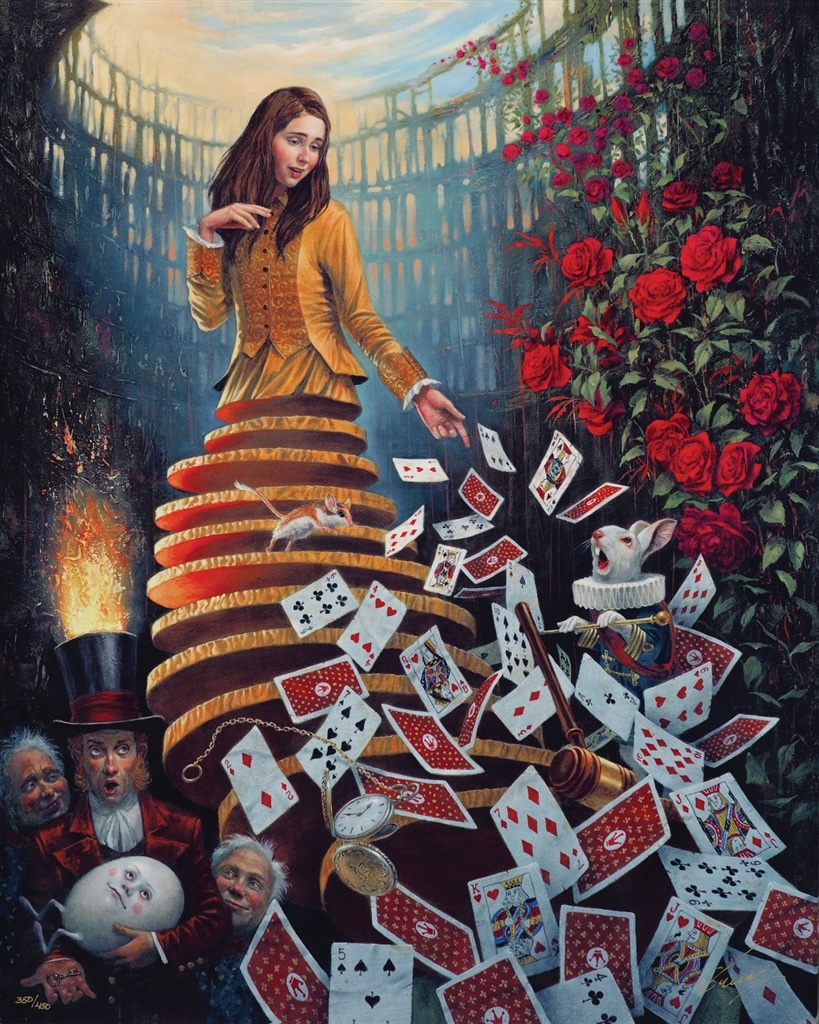
How does TPC relate to our other distinct considerations on the computable axiomatic-deductive condition and ideal of knowledge (which evidently does not involve any claim to exclusivity or to exhaust valid cognition) which we expounded in our paper on analyticity and the a priori ? The conclusions of that paper can be seen as flowing directly from TPC. Our formal verification principle is epistemically modest. To come to this conclusion relative to formal axiomatic-deductive systems, TPC must be presupposed. Hence formal axiomatic-deductive systems cannot in themselves be sufficient to unveil their own transcendental determinations and conditions. And formalized transcendental deduction itself cannot subsume TPC but again presupposes it. TPC must be self-deducing, self-illuminating, self-sufficient, self-founding, self-justifying (somewhat like for Kant the 'I think' is the condition and source of the categories and hence of logic itself). And yet does it make sense to speak of a 'deduction' here without circularity ? TPC cannot depend on logic anymore than anything in a dream can in itself awaken one from the dream. And yet this does not decrease the value and importance of the formal verification principle. If a philosopher or anyone else engages in linguistic activity, linguistic expression, then it is legitimate to subject the output to the formal verification principle, to the ideal of a formal game. All logos is bound to logic, including philosophy and any discourse about logic and reason. Philosophical logic is like two mirrors reflecting each other. Yet via TPC one plays the game knowing it is a game (dreams the dream knowing it is a dream) but without trivializing it for being a game. The game is much like a children's game with the purpose of teaching. Logic is a crutch to help us learn to see (i.e. to develop TPC). But TPC is not deduced or justified from logic anymore than swimming is justified or deduced from water wings. But there is another aspect beyond the simile of a helping crutch. Logic is the laws of thought but not the justification of thought itself. We think, or rather, we are thought, but we seldom see thought itself as it is, from a distance. The ability to see through the game, not only to see the game as a game, but to see immediately non-discursively the game, the playing of the game, the player of the game, as something that is not necessary and yet at the same time the direct cause of many unpleasant things. Exactly like Alice's final attitude to a 'pack of cards' or Schopenhauer's metaphor about the chessboard after the game is over. This is related to transcendental philosophical praxis (TPP). TPP involves the coming to awareness that the things that bother us are not really things in themselves and but only images in our own minds. And that we have actually the capacity to exert an enormous power over the entire content of our own mind, conditioned by habit and practice. And the most importance practice and habit is that of viraga, nirodha and patinissagga. Thus TPP (the sister of TPC) gives the true philosophical meaning to the often abused or trivialized assertion: we create our own reality.