Showing posts with label mind. Show all posts

Saturday, May 23, 2026

Yet more short considerations on AI

The philosophical significance of LLMs and a potentially powerful philosophically based critique of LLMs have not yet been developed and perhaps their importance has not even been recognized yet.

Could LLMs be tied to a certain philosophical view regarding the mind, language and the world? And if such a view is manifestly erroneous could not this furnish a sound basis for acknowledging - alongside numerous other reasons - the social and cultural harm of LLMs?

For instance, could we not explore the relationship between LLMs and Quinean extensionalism and meaning-as-use theories? Are not LLMs based on the rejection of the irreducible intensionality of human symbolic activity? Behind every symbol there is an intension. And a formal theory of intensionality must itself acknowledge the intensions of its meta-symbols.  But there is no intensionality in LLMs beyond that of the humans involved in their creation. Searle's Chinese Room ignores the deeper philosophical meaning of computation - or a potential associated geometric theory of meaning - but may be of interest for a critique of LLMs.

Do LLMs compute? Computation is a primordial intensional human activity (see our paper Analyticity, Computability and the A Priori). 

Perhaps there are other machine learning models of language of a more geometric or even combinatorial-algebraic nature which would have interested Riemann who wanted to relate meaning to a kind of cognitive geometry.   Perhaps statistical regularities should be traced back to geometry.

What are LLMs really, formally? Can we formalize the critical values wherein they become 'adequate' for their proposed task? What exactly in 'large'? How can this be formalized rigorously? Can LLM techniques be used for formal axiomatic-deductive systems and automated theorem proving? Or can we prove certain fundamental limiting theorems about the powers of LLMs akin to the unsolvability of the halting problem and Gödel's incompleteness theorems?

LLMs only exist because of the Internet. The Internet and LLMs are part of the same historical-cultural-technical process.  This ontological process might be described as the datafication of humanity. Language ceases to be a tool of human thought, communication and culture-building but rather a tool for the reduction, degrading, emptying, perversion and commodification of humanity itself. The Internet and LLMs are the anti-Gutenberg. Man has become text, sound, image, data, statistics. LLMs are a counterfeit reality, a monstrosity, the world becomes one big corporate controlled screen.

 If we compare the training data and the resulting LLMs is there or not a loss of information? Would it not be more worthwhile to develop sophisticated search algorithms and querying language to access the training data directly?

 LLM culture is the culture superficiality, atomization, banality, cosmetics and deception (a LLM is almost a trained deceiver in the biological sense - it detects and mimics human patterns). There is a loss of the multiple layers of meaning behind every symbol which cannot be reduced to statistical correlations with other symbols. Meaning is replaced with arbitrary social-statistical emergent correlative patterns.

The realm of pure mathematics - and that of pure logic, combinatorics and computability - is a pure realm which LLMs cannot touch or corrupt.  So the formal mathematics and formal philosophy projects, contrary to popular misconception likely resulting from deliberate propaganda and deception - are the antithesis of and antidote for LLM culture. There is a pure universal computational-mathematics-akin language (far beyond the natural language or the audio-visual data  that can be perverted and imitated by LLMs) and a pure logic and a pure thought and mankind may indeed hope to attain them. 

LLMs are not intelligent and statistics cannot solve formal computational problems nor can they encompass the pure a priori synthetic principles of formal computational systems (i.e. the cognitive certainly of the foundational principles for metatheoretic knowledge) as detailed in our paper mentioned above.

No statistical pattern analysis of the shadows are sufficient to lead to knowledge of the object. Pixel injection in image recognizers demonstrates this fact, and similarly for formal reasoning.  Besides lacking intensionality, LLMs lack reference and context (despite the misleading terminology of context windows). 

And most important of all since the true intellect is inseparable from morality, empathy and compassion, completely beyond the reach of LLMs. LLMs do not have the bondage to an illusion of a self.

A major task of philosophy is to destroy the evil empire of LLMs and a good starting point is deconstructing and refuting the worldviews (extensionalism, meaning-as-use) which LLMs embody. 

Is a lawyer someone trained in a specific system of laws or someone who has developed the skill to study, interpret and apply any given system of laws or perhaps be able to cope with significance changes in present laws?  Such a metalawyer is the analogue of a universal Turing Machine. A LLM could never be a judge or a metalawyer - it could not grasp the spirit of legal institutions or the deeper meaning of a given legal context.

Billions use light-bulbs without understanding the underlying physics. Billions could use LLMs thinking they are conscious.

LLMs will become more interesting in the measure in which the multilayer perceptrons models are replaced by geometrically and mathematically more sophisticated models (KANs are a step in the right direction).

Friday, December 5, 2025

Philosophy of Awakening

 We mentioned before that the is a difference between a true spiritual path (leading beyond anguish and suffering) and a false spiritual path. A true spiritual path involves essentially a habit and state of mind which  we call philosophical awareness or consciousness. The false spiritual path completely lacks it. This state of mind we could attempt to describe as transcendental philosophical consciousness (i.e. awareness, analysis, inquiry)  of the totality of consciousness itself (the immanent world). We use the abbreviation TPC.  One of its oldest and most magnificent attestations is found in the Pali nikayas (with the Socratic dialogues and Pyrrho) and more recently to a certain degree in Hume and Kant (and there was an influence of the late Academy and Pyrrhonism via Augustine and Descartes). This is what Schopenhauer said concerning Kant's Critique of Pure Reason (the analogies of experience): never has the world been looked at from a greater distance. At the present we have a scholar, by name of Dennis Schulting, who has written several books dedicated to defending and expounding the true meaning and spirit of first edition of Kant's Critique, that is, to bringing out the centrality of a form of TPC in the entire deductive and argumentative scheme of the aforesaid work.   Our project is not only to say something about what TPC involves but also to discuss its epistemic and logical aspects, a subject of uttermost difficulty. And of central concern is of course its close relationship to introspective psychology and so-called psychologism (as well as the ambiguous hydra of the term 'idealism'). And discussing the often subtle yet ultimately radical difference with Hegel and Husserl.  There is always a danger that TPC may lapse back into the modes of non-TPC consciousness. That is, a false objectification of TPC insight and knowledge. Such an objectification involves forgetfulness (of constitution, condition and presupposition) and loss of insight and transcendental progress.   TPC crucially involves a way of seeing and questioning (bracketing, suspending) the totality of (conceptual, intuitive, affective, volitional, egological, spatial-temporal, somatic, etc) experience. The total awareness of the total sphere and process of thought and what is beyond all thought and what thought is actually behind and the fact that it is behind it. TPC is a gradual affair,  an ideal which is worked towards by practice and training. TPC traces back and unveils the unified common source of all branches of philosophy. Poetical language achieves its highest function in the expression of TPC. All this we have written about in our compiled Philosophical Monologues collection.

There are no mathematical models of consciousness, and a fortiori for the boundless sphere of TPC,  and no formal axiomatic-deductive systems either. Rather these all proceed from the knowledge and insight offered by TPC. But there could by mini-models, projections, symbols and for every false philosophy or false scientific theory  a certain and valid formal refutation. TPC itself cannot be part of academia (but more concrete, specialized subjects, guided by TPC, can) and it is something that one must find for oneself. TPC can be compared to the state in which when dreaming one knows one is dreaming, or at least, seriously questioning if the totality of one's experience be not in this situation a mere dream. And also importantly, asking: what is a dream?

It is TPC that is about 'saving the phenomena' and involves noticing how there is a vast domain of phenomena, of 'realities' as real as anything else, which includes all forms of sensation, perception, feeling, volition, thought, cognition, meta-cognition, memory, imagination, learning, habit, attachment, sense of self, sense of identity  and so forth which is a central and important part of  the 'world', as important if not much more than anything other alleged aspects (specially those pertaining to so-called 'natural' science). This truth is powerfully present in the Pali suttas which predate Socrates and, as argued by Mikel Burley (2007), in the ancient system of Samkhya.  The terms 'consciousness' and 'the psychological sphere'  are often used in a deflated, trivialized, distorted and illegitimate way. Understanding, such as it is and presents itself, the vast and central role of consciousness and meta-consciousness in all that is, in all the 'world',  is a first step from waking up from  the dream, and it follows the shining wake of Socrates and Pyrrho and there is much to be said about certain aspects of Democritus (atomism is in itself a formal template of logical analysis, as in the abhidharma, and not an hypothesis in natural science or positing of a reductionism between different ontological domains), Carneades, Sextus and Augustine's Contra Academicos: 'I call whatever appears to me the world'. Another powerful force leading to this direction is the theory of knowledge (the earliest known text being the Theaetetus), the questioning of how we come to know things, of how we know that we know (the criterion of truth),  of what knowledge is. The theory of knowledge draws us inevitably back towards the great forgotten pristinely primordial sphere of consciousness. Becoming aware of consciousness as consciousness (and experience as essentially consciousness) and its true position in the scheme of things is truly waking up from a dream and drawing close to TPC.

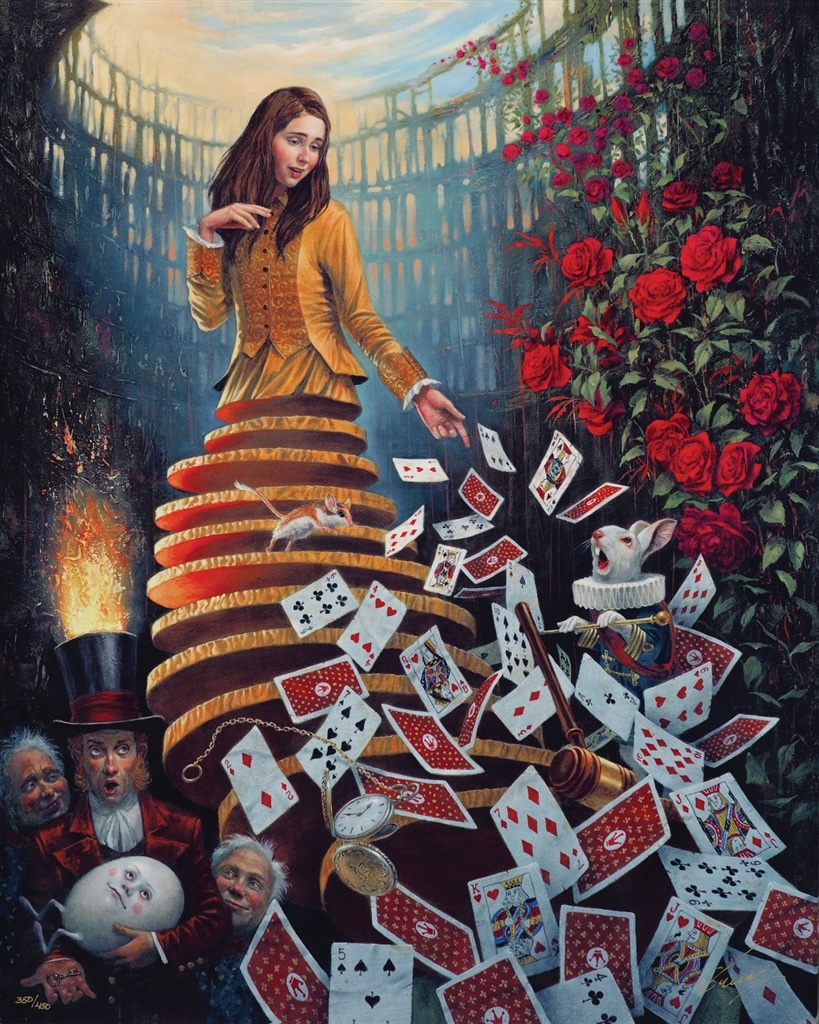
How does TPC relate to our other distinct considerations on the computable axiomatic-deductive condition and ideal of knowledge (which evidently does not involve any claim to exclusivity or to exhaust valid cognition) which we expounded in our paper on analyticity and the a priori ? The conclusions of that paper can be seen as flowing directly from TPC. Our formal verification principle is epistemically modest. To come to this conclusion relative to formal axiomatic-deductive systems,  TPC must be presupposed. Hence formal axiomatic-deductive systems cannot in themselves be sufficient to unveil their own transcendental determinations and conditions. And formalized transcendental deduction itself cannot subsume TPC but again presupposes it. TPC must be self-deducing, self-illuminating, self-sufficient, self-founding, self-justifying (somewhat like for Kant the 'I think' is the condition and source of the categories and hence of logic itself). And yet does it make sense to speak of a 'deduction' here without circularity ? TPC cannot depend on logic anymore than anything in a dream can in itself awaken one from the dream. And yet this does not decrease the value and importance of the formal verification principle. If a philosopher or anyone else engages in linguistic activity, linguistic expression, then it is legitimate to subject the output to the formal verification principle, to the ideal of a formal game. All logos is bound to logic, including philosophy and any discourse about logic and reason. Philosophical logic is like two mirrors reflecting each other. Yet via TPC one plays the game knowing it is a game (dreams the dream knowing it is a dream) but without trivializing it for being a game. The game is much like a children's game with the purpose of teaching.  Logic is a crutch to help us learn to see (i.e. to develop TPC). But TPC is not deduced or justified from logic anymore than swimming is justified or deduced from water wings. But there is another aspect beyond the simile of a helping crutch. Logic is the laws of thought but not the justification of thought itself. We think, or rather, we are thought, but we seldom see thought itself as it is, from a distance. The ability to see through the game, not only to see the game as a game, but to see immediately non-discursively the game, the playing of the game, the player of the game,  as something that is not necessary and yet at the same time the direct cause of many unpleasant things. Exactly like Alice's final attitude to a 'pack of cards' or Schopenhauer's metaphor about the chessboard after the game is over.  This is related to transcendental philosophical praxis (TPP). TPP involves the coming to awareness that the things that bother us are not really things in themselves and but only images in our own minds. And that we have actually the capacity to exert an enormous power over the entire content of our own mind, conditioned by habit and practice. And the most importance practice and habit is that of viraganirodha and patinissagga. Thus TPP (the sister of TPC) gives the true philosophical meaning to the often abused or trivialized assertion: we create our own reality. 

Saturday, November 8, 2025

Philosophemes on Consciousness

Can there be consciousness without knowledge or knowledge without consciousness ? Does not all knowledge involve self-knowledge and the positing and definition of a self-subject ? All knowing involves a knowing of the knowing process itself. What can be known ? What should be known ? What is the highest knowledge and what is the highest knowledge about ?

What is ignorance ? An ambiguous term. It can mean erroneous thought or lack of the right cognition regarding something. But it can also mean simply non-knowing, that is, a consciousness which is not in the act of knowing. The ordinary conscious act of knowing is a relation, a flowing out, an entanglement, a diremption, limitation or even corruption of consciousness - accompanied by a positing of a subject-self and the awareness of the knowing process itself (the reflection into self via negation of the positing).

In another sense knowing is simply the state of any state of consciousness, a pure self-relatedness. Thus we have an absolute knowing which involves a non-knowing in the common sense, which is the fullness of the liberated mind that does not flow out relationally but has its self-positing in self-abrogation and self-reflection on its own freedom.

The highest knowledge is the effect of a self-referential, self-illuminating, self-enfolding (or self-unfolding) process of consciousness itself.

Know the structure and dynamics of the world to know the structure and dynamics of the mind : time, transience, impermanence, constant self-negation and self-production, self-implication, returning to immediacy and beholding its compositeness. Immediacy is actually result, relativity (reflection), mutual reference and dependence: past and future, memory and expectation.

Note the possibility of direct action of consciousness on consciousness, of expunging, and not being a passive spectator only - it cannot obtain detachment and freedom without breaking the cage.

The subtle body (or first-person experience of the body known from the inside) is an oasis were we can find a different mode of consciousness.

True philosophy cannot be academic philosophy, because it imposes and assumes an exterior a priori standard and reification - a certain enculturation, historization and socialization. This is what is so lacking in western philosophy, in Hume, the lack of orientation and insight capable of leading to personal transformation. Western philosophy is often just a shell.

Afferent vs. efferent nerves. The mind an internal feedback, a watermill, thoughts function both as input and as output (an internal loop driven by the main current - reflected in neural anatomy). A little like Barendregt's diagram. Thus we can have afferents we do not want or want afferents we don't have. We can be force to do efferents we do not want to do or want to do efferents we can't. The watermill feedback structure is built through this continuous current, an eddy. The prison of the mind.

Watchfulness must be centered on a turning inwards, not only looking on exterior spheres of common experience, but encroaching on and discovering and centering itself on previously hidden, inwards domains, the abode of forces that act behind the scenes, which wield power if unseen, but weaken under the sunlight of clearly conscious watchfulness, turned inward, casting a steady light wherein they are caught, found out. Ordinary consciousness is a kind of exteriorization and out-flow of itself, a self-nescience, self-passivity and self-marginalization.

Parallel to watchfulness progressively consolidating itself inwards we must also develop the practice of considering the total sphere of experience, of consciousness, as a whole, considered in its entirety, in a balanced way radiating, as it were, out from the innermost center, so that there is attained a balance of the inner and the outer and the exterior sphere is re-integrated into the unity of the center.

Thought is a product, a proliferation, the leaves, the buds, the result of inner forces, energies, organizations and productions - all stemming from a central source. Watchfulness and its sphere must regain the usurped throne, wherein sits the original producer, controller of all thought. 

If the self is an illusion, a fuzzy concept, a false concept - how can there be a theory of self ? Can there be a theory of illusions or of false, vague, fuzzy, ill-defined inconsistent, mutable concepts ? How does Hume explain - according to his theory - a fake impression which cannot be traced genetically to a complex of sense impressions or feelings ? Few modern western philosophers (for the ancients it is a different matter) have attempted a theory of illusion. Schopenhauer's theory of the negation of the will is noteworthy, a real attempt at a theory of the illusion of self (and finite individuality).

Logic is an attempt at the psychoanalysis of language. Language acts in different ways and at different levels on the mind, ways and levels beyond the most immediate abstract level.

There is so much more to be said about 'meaning' (beyond both surface representation and mere social dynamics). Wittgenstein took a wrong a theory of meaning and replaced it with an even worse one. The deeper levels of meaning and action are related to a kind of rhythm and music in language (both metaphorically and non-metaphorically). Hence the importance and irreplaceability of direct reading, hearing, recitation of certain kinds of texts.

There is a lot to be said about the heart and how it relates to spiritual development and in particular to consciousness, to the breath, to impression and illusion of 'self' , to Schopenhauer's negation of the will, to the irradiant contemplations, the little known significance of 'poverty', 'simplicity' and a certain spiritual act related to unification and anagogic intent, certainly found in Plotinus and of course in the Yoga and Vedanta.

It is not a question of replacing the false sophistry with a single true philosophy. Rather true philosophy must mean a collection of possible perspectives (darshanas) with an anagogic dimension - as well as powerful rebuttals of false philosophies. Thus different vectors can point at the same center, but there are also vectors which categorically do not point at this center. While there are false philosophies such as Wittgenstein, Ryle, Dennett, Parfit, Rorty and Brandom there are a plurality of truth-pointing perspectives.

Truth is relational: one formal system representing another divides sentences into provably true, provable false, neither provable or not provable but anagogic and self-referential (true in a higher plane) and neither provable nor not provable but not anagogic or self-referential. Two systems can be mutually inconsistent and yet metaconsistent in the sense of there being a canonical higher-level encompassing system which integrates them both at a higher level.

Know the texture, the symptoms of the mind, if the defilements are there. To inspect objectively, in an unfiltered way, the totality of one's consciousness, but to inspect diagnostically, reviewing the symptoms. Thus we must look, inspect, distantly, objectively, in a neutral way, but in order to interpret, diagnose, reveal symptoms.

Introspection must be total, all-encompassing, neutral, balanced and include the body-sensation (pressure, temperature), proprio-perception, the breath, feeling just as much as thought, the fields of sense-perception, inner speach, imagination etc. Find the center, progressively deeper layers, turn inwards. But also act, transfigure, integrate, calm, expunge the mind.

There are models of consciousness inspired by physics: consciousness a self-subsisting field spread out across space-time as well as beyond space-time. The body represents a kind of fragmentation and limitation of this field (a Faraday cage). Like a receiver and transmitter. The limited and trapped consciousness must energize and expand and regain its unity with the total field of consciousness. These kinds of models that objectify consciousness are problematic. Also not all merging of ordinary consciousness into another enveloping 'larger' consciousness is necessarily good (i.e. consider collectivism and cults) or represents a higher state of enlightenment and freedom. The contrary could well be the case. What is of interest is consciousness in and for itself, the consciousness of consciousness which is absolute and free. Consciousness by folding in on itself finds the secret to unfolding itself and thus attains freedom.

There can be no science or philosophy of consciousness yet (only that of the products or reflections that pass through consciousness, logical and linguistic and other artistic-semiotic artifacts) - because we to do not possess immediately any proper means or language to analyze it or to express things about it. The only thing that can be given is a practical guide to gradually develop the sight required to see and know what should be seen and known. Regarding consciousness, language is practical, methodological, never purely scientific or philosophical. That must come much later. Consciousness must transform itself first in order to become an object unto itself and to be able to talk about itself. Consciousness is not so much a given as that which may and should come to be.

Svetla Slaveva-Griffin, Plotinus on Number (2009)

https://bmcr.brynmawr.edu/2010/2010.02.17/ Ennead VI,6, which deals with Plotinus' philosophy of number, is a very difficult text to und...