Showing posts with label scepticism. Show all posts

Friday, April 17, 2026

The heart of madhyamaka - kicking away the ladder

Philosophical discourse may be logically, linguistically, psychologically, sociologically and ideologically analyzed. One can question whether philosophical discourse has any claim to veracity or value. One can be amazed by the hubris and confidence of philosophers and question the epistemic or intrinsic public value of the discourse they produce.  One can inquire whether philosophers fail to question the assumptions they tacitly assume, or whether some positions be never stately clearly but only insinuated (cf. Ernst Gellner's Words and Things). One can question whether self-proclaimed "rigorous" philosophy is actually as "rigorous" as it claims to be and question whether such a "rigor" be not entirely illusory and only based on stylistic mimicry and convoluted jargon masking the lack of any possibility of formalization in an axiomatic-deductive system. One can question whether philosophical discourse be not a mere language game (like the crossword) based on vagueness, ambiguity and unconscious association, tolerated due to the loftiness of the object of discourse, the stylistically "scientific" semblance of the discourse itself, specially when focused on technical topics in logic and language. Surely we must reject a game based on the dynamics and structure of human consciousness which yet denies outright the underlying role of human consciousness in the spirit of: pay no attention to the man behind the curtain! Philosophy can well seem scientific yet be not so and produce arguments that on the surface seem to be like a logical mathematical proof but fall utterly short of it. And, most importantly, be completely lacking criteria for veracity and value. And what are we to make of philosophers who downplay  or trivialize introspective psychology, mathematical linguistics and mathematical linguistic analysis (the only way to go beyond circularity in linguistics) or the universal ethical principles of human and animal rights? All human activities with value have  public, objective criteria. Philosophy does not have such criteria. Contrary to most academic critiques of academic philosophy the central flaw is not ignoring fundamental domains of human experience and the human condition (which is a valid enough point) but the claim to be analytical and rigorous while being not so and lacking any objective public criteria of veracity or value. A mathematical proof can be formalized and checked in a proof assistant such as AgdaIntrospective psychological descriptions can be confirmed, verified or corrected by comparison and discussion among researchers.  A theory in natural science can be confronted with experimental data and evidence. A medication or medical procedure has the objective criterion of the data of clinical trials.  A work of art is received by the public.. But philosophy has no criteria beyond "deemed acceptable to be published in journal X by the editor and reviewers A,B,C,...". A tacit assumption and error is that the mathematical formalization of (a relevant fragment of) natural language is neither possible nor desirable for philosophy. Another one is (often tied to physicalist dogmatism): introspective psychology (as in Hume, William James and Brentano)  is of little value and not a source of philosophical insight and progress. And if  to this we add to this the rejection of the marvelous metaphoric, poetic and analogical capabilities of natural language, we come to the conclusion that such philosophy is mere verbiage, a linguistic production without veracity or value which merits careful linguistic, psychological and cultural diagnosis and analysis.

A note on the formalization of natural language. When two people sit down to play a game they have reached an agreement. The pieces on the board and the rules will represent the game but are not themselves the game.  The agreement is that the board, pieces and rules will stand for the game. A formalization of a fragment of natural language will take the form of a formal system incorporating a series of formal definitions which a group of people will agree represents a certain fragment of natural language. This group will agree (based on a perceived contextual adequacy) to abide by the rules of the game of such a formal system for the purposes of certain arguments or debates - they agree that the formal system and its moves stand  for the linguistic activity of the debate. The formalization of natural language is in a way a return to the original essence of natural language. Indeed as mentioned in the conclusion of our Analyticity, Computability and the A Priori, it is through the reliving and showing forth of the process of our psycho-cognitive development that we may hope to ultimately see the light regarding the problems of philosophy - without naively confusing the developmental path of a cognitive structure with its intrinsic constitution(*). Just as Kant distinguished between a legitimate and illegitimate use of reason (the transcendental illusion once the basic foothold of logic and introspective intuition are abandoned) so too we must distinguish between a perfectly legitimate use and application of language (in which the adequacy of language is unquestionable, independently of any formalization) and an illegitimate use and domain as exemplified by the naive linguistic productions of philosophy.  The formalization of natural language is a necessary critique, a judgment, a challenge and a sifting.

(*) A complementary method will involve what we described as a "linguistic phenomenology". We are given an object and a restricted vocabulary (which may be or not be a set of proposed semantic primes) and the task is to define, describe or tell a story about that object using only such a vocabulary. 

Friday, March 20, 2026

Anatta

Anatta was indeed the central philosophy of early, authentic buddhism. But is was not fully understood and rapidly compromised and corrupted. Its recovery, preservation and further exposition and development is found nevertheless in various schools of the East and West, both ancient (and even pre-buddhist) and modern.

Our working hypothesis is that original Buddhism was strictly based on ethics, philosophical insight and meditation (bhavana) and had no religious component whatsoever. Metaphysical questions and questions regarding the afterlife were treated exactly as in Pyrrho or Kant's transcendental dialectics. The concepts of karma and rebirth were originally philosophical teachings whose meaning was lost, being corrupted into literal religious beliefs (wherein the bhikkhu ultimately replaced the brahmin). The original teaching on karma (which involves impersonal polarized psychological energies) did not depend in the least on a literal mythological understanding of rebirth. 

Thus for example we can think of human beings as receptors, generators and transmitters of certain psychological energies, and as being immersed in an environment in which such energies can also exist in a free form.  Negative energies and deeds not only rebound with unfortunate consequences in the life of the individual but also, conceivably, during the process of death the sum-total of such an individual's habitual and accumulated energies may be explosively released into the world and thus influence other beings in a positive, neutral or negative way (there might be an analogy with a supernova in astrophysics). Also during the process of death the individual may experience a kind of final dream in which that individual's life-history and sum-total of energies and habits is lived out in a final synthetic way. 

We hold that Anatta is the essence and culmination of TPC and TPP.  We have discussed and highlighted the importance of Pyrrho, Hume, Nagarjuna - and a certain approach to Hegel.

Let us just say that an entity or structure can be inherently not only fragmentary and incomplete but also inconsistent. A fragmented inconsistent being does not have within itself a representation of its own negation, non-being, of a state where it is not. That is to say, there is no true being without self-transcendence. The best that can happen for an entity is to see clearly the circularity of its own inescapable inner contradiction.

The core of TPP is the development of intentional habits and fundamental energies and forces, virtues of consciousness which counteract from a central source and in all dimensions  the limitations, delusions, inconsistencies and self-postulation and self-proliferation of the fragmentary being.

The categories of consciousness (including space, time, locality) are to be transcended.

We must find strong evidence for the presence and practice of this same TPC and TPP among the most diverse places and people in prehistoric, classical antiquity and subsequent history, all in complete agreement with regards to the only necessary central essential core (which in itself as virtually infinite inexhaustible content).

The primordial tradition is not some kind of primitive human culture, rather it is the ubiquitous and timeless presence of the power of complete transcendence of humanity.

 There is not great difference between logic and argumentation and games. These are the factors involved. One accepts a game  G as a game and holds that the game is interpersonally objective and follows publically agreed upon rules.  One fixes a side, a starting point, a choice X in G. Then X is processed by G (in a way which may involve deliberate choice and participation, or not) and eventually yields an element U from a predefined set of possible outcomes. Logic and argumentation involves furthermore that acceptance of a translation-representation between intentional mental-cognitive content and a choice X as well as the reverse translation from U back to meaningful mental content. Furthermore it is often the case that we postulate a principle of continuity in that the processing steps of G are transparent in their mental interpretability though such do not play any role in the processing itself.

The interpretation of Gödel's dialectica translation in terms of games is one of the most interesting developments in logic in the recent decades (a formula is turned into a game-like formula and proofs become winning strategies codified by closed terms in system T) - and should be compared not only with our reconstruction of the debate game in Aristotle's Topics but also with modern proposals for a logic of dialogue.

We observe that in original Buddhism we meet with many suttas which share a logical-argumentation template and dialectical method which is itself far more important than the contingent details. This method involves a combinatoric bringing to light and articulation of possibilities aiming a bringing about a catharsis and detachment (like the Pyrrhonic epokhe).

Thus Buddhist dialectics and Buddhist phenomenology rest both on a subtle hermeneutics of language, that is, language considered as the vehicle and dwelling place of the proliferation and self-reinforcement of the fragmentary entity. Hermeneutics asks the most fundamental questions which lead to the appearance of cracks and tears in the fabric of constructed reality.

Friday, December 5, 2025

Philosophy of Awakening

 We mentioned before that the is a difference between a true spiritual path (leading beyond anguish and suffering) and a false spiritual path. A true spiritual path involves essentially a habit and state of mind which  we call philosophical awareness or consciousness. The false spiritual path completely lacks it. This state of mind we could attempt to describe as transcendental philosophical consciousness (i.e. awareness, analysis, inquiry)  of the totality of consciousness itself (the immanent world). We use the abbreviation TPC.  One of its oldest and most magnificent attestations is found in the Pali nikayas (with the Socratic dialogues and Pyrrho) and more recently to a certain degree in Hume and Kant (and there was an influence of the late Academy and Pyrrhonism via Augustine and Descartes). This is what Schopenhauer said concerning Kant's Critique of Pure Reason (the analogies of experience): never has the world been looked at from a greater distance. At the present we have a scholar, by name of Dennis Schulting, who has written several books dedicated to defending and expounding the true meaning and spirit of first edition of Kant's Critique, that is, to bringing out the centrality of a form of TPC in the entire deductive and argumentative scheme of the aforesaid work.   Our project is not only to say something about what TPC involves but also to discuss its epistemic and logical aspects, a subject of uttermost difficulty. And of central concern is of course its close relationship to introspective psychology and so-called psychologism (as well as the ambiguous hydra of the term 'idealism'). And discussing the often subtle yet ultimately radical difference with Hegel and Husserl.  There is always a danger that TPC may lapse back into the modes of non-TPC consciousness. That is, a false objectification of TPC insight and knowledge. Such an objectification involves forgetfulness (of constitution, condition and presupposition) and loss of insight and transcendental progress.   TPC crucially involves a way of seeing and questioning (bracketing, suspending) the totality of (conceptual, intuitive, affective, volitional, egological, spatial-temporal, somatic, etc) experience. The total awareness of the total sphere and process of thought and what is beyond all thought and what thought is actually behind and the fact that it is behind it. TPC is a gradual affair,  an ideal which is worked towards by practice and training. TPC traces back and unveils the unified common source of all branches of philosophy. Poetical language achieves its highest function in the expression of TPC. All this we have written about in our compiled Philosophical Monologues collection.

There are no mathematical models of consciousness, and a fortiori for the boundless sphere of TPC,  and no formal axiomatic-deductive systems either. Rather these all proceed from the knowledge and insight offered by TPC. But there could by mini-models, projections, symbols and for every false philosophy or false scientific theory  a certain and valid formal refutation. TPC itself cannot be part of academia (but more concrete, specialized subjects, guided by TPC, can) and it is something that one must find for oneself. TPC can be compared to the state in which when dreaming one knows one is dreaming, or at least, seriously questioning if the totality of one's experience be not in this situation a mere dream. And also importantly, asking: what is a dream?

It is TPC that is about 'saving the phenomena' and involves noticing how there is a vast domain of phenomena, of 'realities' as real as anything else, which includes all forms of sensation, perception, feeling, volition, thought, cognition, meta-cognition, memory, imagination, learning, habit, attachment, sense of self, sense of identity  and so forth which is a central and important part of  the 'world', as important if not much more than anything other alleged aspects (specially those pertaining to so-called 'natural' science). This truth is powerfully present in the Pali suttas which predate Socrates and, as argued by Mikel Burley (2007), in the ancient system of Samkhya.  The terms 'consciousness' and 'the psychological sphere'  are often used in a deflated, trivialized, distorted and illegitimate way. Understanding, such as it is and presents itself, the vast and central role of consciousness and meta-consciousness in all that is, in all the 'world',  is a first step from waking up from  the dream, and it follows the shining wake of Socrates and Pyrrho and there is much to be said about certain aspects of Democritus (atomism is in itself a formal template of logical analysis, as in the abhidharma, and not an hypothesis in natural science or positing of a reductionism between different ontological domains), Carneades, Sextus and Augustine's Contra Academicos: 'I call whatever appears to me the world'. Another powerful force leading to this direction is the theory of knowledge (the earliest known text being the Theaetetus), the questioning of how we come to know things, of how we know that we know (the criterion of truth),  of what knowledge is. The theory of knowledge draws us inevitably back towards the great forgotten pristinely primordial sphere of consciousness. Becoming aware of consciousness as consciousness (and experience as essentially consciousness) and its true position in the scheme of things is truly waking up from a dream and drawing close to TPC.

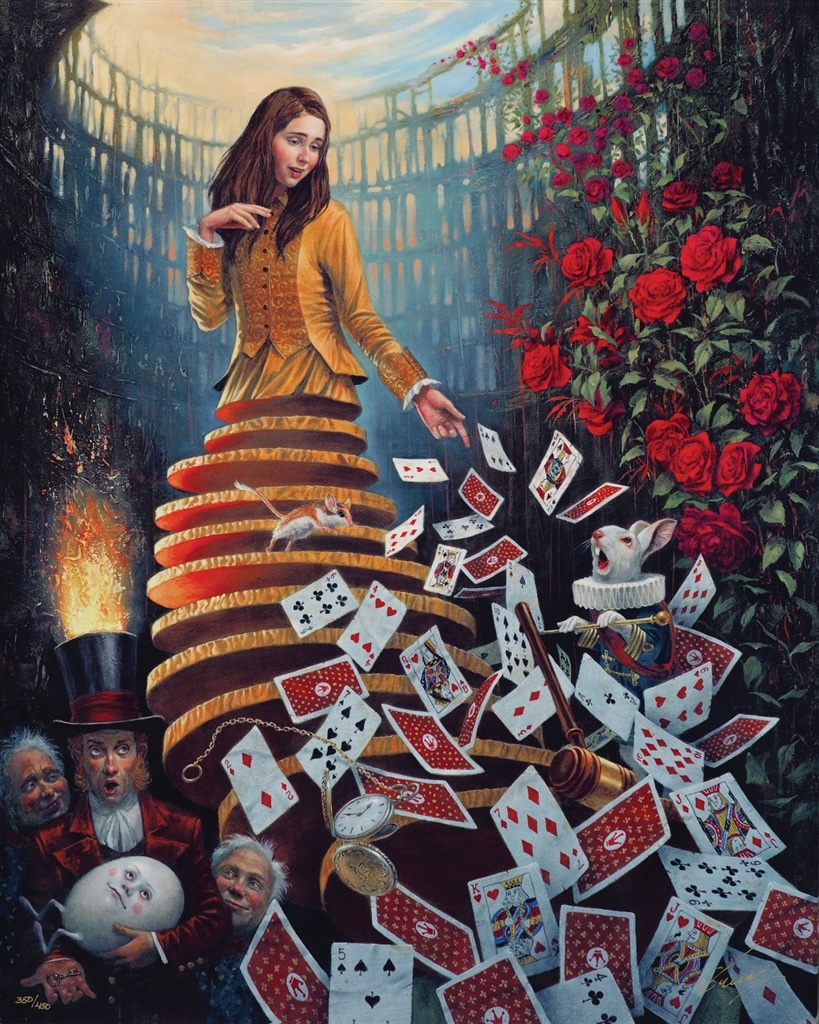
How does TPC relate to our other distinct considerations on the computable axiomatic-deductive condition and ideal of knowledge (which evidently does not involve any claim to exclusivity or to exhaust valid cognition) which we expounded in our paper on analyticity and the a priori ? The conclusions of that paper can be seen as flowing directly from TPC. Our formal verification principle is epistemically modest. To come to this conclusion relative to formal axiomatic-deductive systems,  TPC must be presupposed. Hence formal axiomatic-deductive systems cannot in themselves be sufficient to unveil their own transcendental determinations and conditions. And formalized transcendental deduction itself cannot subsume TPC but again presupposes it. TPC must be self-deducing, self-illuminating, self-sufficient, self-founding, self-justifying (somewhat like for Kant the 'I think' is the condition and source of the categories and hence of logic itself). And yet does it make sense to speak of a 'deduction' here without circularity ? TPC cannot depend on logic anymore than anything in a dream can in itself awaken one from the dream. And yet this does not decrease the value and importance of the formal verification principle. If a philosopher or anyone else engages in linguistic activity, linguistic expression, then it is legitimate to subject the output to the formal verification principle, to the ideal of a formal game. All logos is bound to logic, including philosophy and any discourse about logic and reason. Philosophical logic is like two mirrors reflecting each other. Yet via TPC one plays the game knowing it is a game (dreams the dream knowing it is a dream) but without trivializing it for being a game. The game is much like a children's game with the purpose of teaching.  Logic is a crutch to help us learn to see (i.e. to develop TPC). But TPC is not deduced or justified from logic anymore than swimming is justified or deduced from water wings. But there is another aspect beyond the simile of a helping crutch. Logic is the laws of thought but not the justification of thought itself. We think, or rather, we are thought, but we seldom see thought itself as it is, from a distance. The ability to see through the game, not only to see the game as a game, but to see immediately non-discursively the game, the playing of the game, the player of the game,  as something that is not necessary and yet at the same time the direct cause of many unpleasant things. Exactly like Alice's final attitude to a 'pack of cards' or Schopenhauer's metaphor about the chessboard after the game is over.  This is related to transcendental philosophical praxis (TPP). TPP involves the coming to awareness that the things that bother us are not really things in themselves and but only images in our own minds. And that we have actually the capacity to exert an enormous power over the entire content of our own mind, conditioned by habit and practice. And the most importance practice and habit is that of viraganirodha and patinissagga. Thus TPP (the sister of TPC) gives the true philosophical meaning to the often abused or trivialized assertion: we create our own reality. 

Theory of Meaning

Meaning, that most illusive of philosophical concepts, is without doubt a ternary relation M(A,B,C): A means B relative to/in/according to C...